There is a verse from the Bible that many of us are very familiar with:
Ask, and it will be given you; search, and you will find; knock, and the door will be opened for you.
Mathew 7:7
For most of my life, I think I unconsciously interpreted this in a fairly transactional way. You ask because you do not have. You ask because something is missing. You ask because reality has not yet supplied what you need. You ask because something is ‘wrong’ and you want it corrected.
But recently, during meditation, 2 things occurred to me:
- Is my asking coming from a place of dissatisfaction? Lack? Needing to correct something that I perceive to be ‘wrong’? And
- If the Bible quote is to be taken at face value, does it mean that God/Life rewards discontent, craving and judgement?
You see, if asking is tied to receiving, then what exactly is being rewarded? Dissatisfaction? Discontent? A sense of deficiency? And, why would life – or God – organize itself around responding to our experience of lack?
But then, a third question emerged:
If life already contains everything that is possible, everything that is known and knowable, then why should asking be necessary at all? Why would reality require us to go through the strange ritual of asking?
And somewhere inside that question, another possibility appeared.

Perhaps asking is not what causes life to give. Perhaps asking is what allows us to become aware of what life has already given.
Perhaps asking is not what causes life to give. Perhaps asking is what allows us to become aware of what life has already given.
Now that changed the entire shape of the bible verse for me.
Suddenly, asking no longer felt like petitioning a reluctant universe or one demanding humility by subjecting me to asking for what is already known to it.
Rather, it felt more like awakening within an already-given reality. Not creating possibility, but noticing it. Not petitioning or persuading life, but participating in it.
The Unseen Nature of asking
The philosopher and phenomenologist, Maurice Merleau-Ponty, suggested, in different ways throughout his work, that we are never detached observers standing outside the world and examining it from a distance. We are already entangled with it before thought begins. The body already responds before the mind formulates. The world touches us before we consciously interpret it. Something calls to us before we know how to name what is happening.
Perhaps questions emerge in exactly this way.
Perhaps we do not first invent a question and then direct it toward reality. Perhaps reality itself stirs the question within us. A longing appears. A curiosity. A restlessness. A pull toward meaning, beauty, healing, understanding, connection. And only afterward do we call it “my question.” But maybe the question began long before “I” did.
It is almost as though the question does not originate solely within me, but emerges from a participatory field in which God-Life-self, already intertwined, brings the question into conscious awareness.
Martin Heidegger, a predecessor of Merleau-Ponty, and himself a philosopher and phenomenologist, once wrote that “questioning is the piety of thought.” Not because questions are sacred in themselves, but because questioning opens a space in which truth can appear.
Rather than an indication of lack, asking may be evidence of relationship
A genuine question is not merely a request for information. It is an opening. A clearing. A loosening of certainty. A willingness to be interrupted by reality.
And perhaps this is why asking matters. Not because life withholds itself until we ask correctly, but because asking changes the structure of our awareness. It prepares us to notice. It sensitizes perception. It reorients attention.
We have all experienced this.
The moment you begin considering buying a particular car, suddenly you see that car everywhere. The moment you begin thinking deeply about grief, you start hearing grief hidden inside ordinary conversations. The moment you fall in love, the world itself seems reorganized around aliveness and meaning.
Our asking may not be proof of emptiness or lack. It may be evidence of relationship
The asking did not create the reality. It revealed your participation in it.
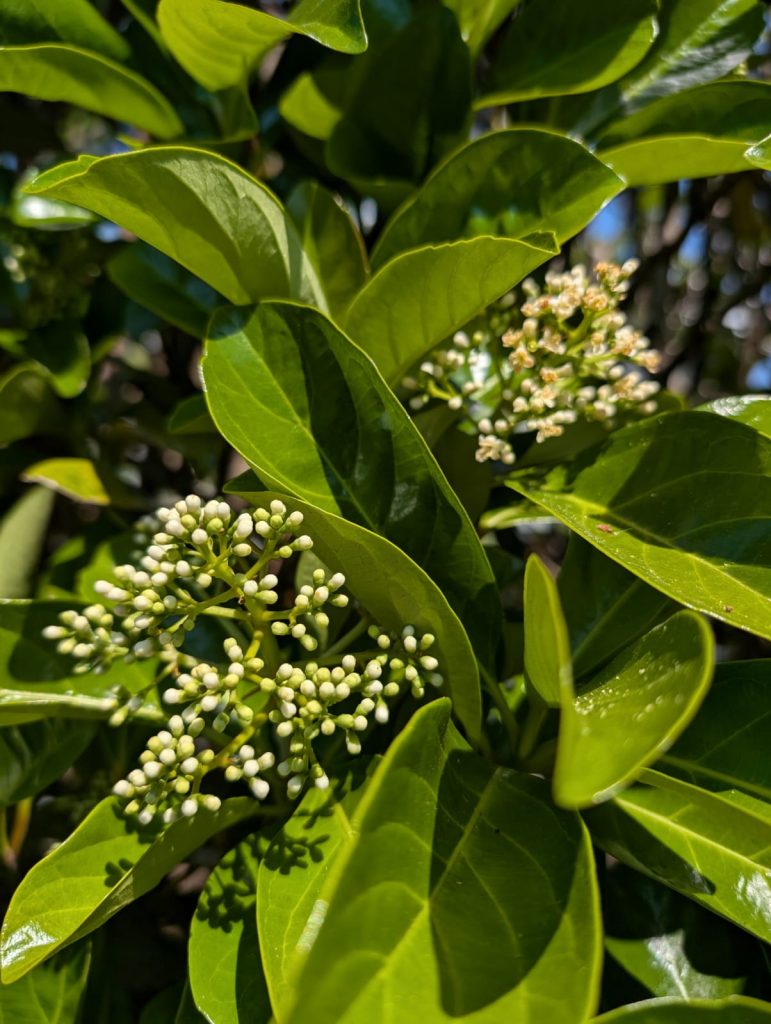
A seed does not invent the sun by reaching toward it. Its reaching is evidence that the sun already exists.
This, I think, may be one of the deepest truths about desire, prayer, longing, questioning and asking. Our asking may not be proof of emptiness or lack. It may be evidence of relationship.
Life forms beings that reach. Life forms beings that seek. Life forms beings capable of becoming conscious of possibilities already woven into existence. And perhaps this is why human beings are such restless creatures. Not because we are defective, but because consciousness itself is participatory. To be conscious is, in some sense, to lean toward.
Of course, not all asking begins beautifully.
There is a difference between asking that grasps and asking that awakens
Much of our asking and questioning emerge from pain. From loneliness, uncertainty, grief, inadequacy, envy, confusion, or disappointment. Sometimes asking begins in the experience of lack. And there is no need to deny this or pretend otherwise. Human beings are vulnerable creatures. We encounter limits constantly. We ache. We desire. We feel the friction between what is and what could be.
Asking as attuning, awakening
But perhaps the deeper invitation is not to eliminate asking, but to refine it. To let asking mature.
Because there is a difference between asking that grasps and asking that awakens.
At first, we may ask:
How do I get what I want or think I need?
But over time, the question may soften into:
How do I become aware of what is already here?
Or even:
How do I allow what is already here?
This is not resignation, nor passive acceptance. It is a shift in orientation. The asking becomes less acquisitive and more participatory. Less obsessed with possession and more attuned to perception. Less about forcing life to satisfy us and more about becoming capable of recognizing what life is already offering.
Rethinking Desire And Longing
We often imagine desire as evidence of incompleteness. But perhaps some desires are better understood as forms of ripening. A fruit ripens because life is already moving within it toward fullness.
A question may emerge in us for similar reasons. Not because we are empty, but because something within us is becoming ready. Ready to perceive differently. Ready to love differently. Ready to inhabit reality differently.
In this sense, even longing may sometimes be less about absence and more about unfolding.
Simone Weil, a philosopher whom I’ve quoted in recent posts, understood something similar when she described attention as one of the purest forms of prayer. For Weil, grace cannot be seized through force or egoic striving. It arrives when the self becomes quiet enough to receive. And perhaps this is what awakened asking begins to resemble: not demanding, but attending; not grasping, but becoming permeable to what is already present.
Not:
Give me what I want.
But:
Help me see what is already here.
Asking As Conscious Participation in Transformation
There is, of course, another kind of asking entirely – the endless asking cultivated by consumer culture and egoic accumulation. More achievement. More validation. More certainty. More optimization. More self. This kind of asking rarely deepens participation in life because it keeps us perpetually turned toward acquisition rather than awareness.
But genuine asking feels different. Less frantic. Less hungry. More like listening than demanding. More like opening than grasping.
Carl Jung believed that much of human life unfolds from depths we do not consciously control. Dreams, symbols, intuitions, and desires often emerge before rational understanding catches up. Perhaps our deepest questions arise this way too.
Sometimes we ask before we know why we are asking. Sometimes the question itself is already carrying us somewhere. Sometimes longing contains intelligence long before cognition understands it.
Anyone who has ever changed profoundly knows this experience. You think you are searching for one thing, but underneath the search, something larger is slowly reorganizing you.
And perhaps this is why Rainer Maria Rilke urged us to “live the questions now.” Not solve them immediately. Not dominate them. Not reduce them prematurely into conclusions. Live them.
Because perhaps questions are not obstacles standing between us and life. Perhaps they are one of the ways life unfolds within us.
Maybe the ancient biblical verse was never transactional to begin with. Maybe it was phenomenological. Existential. Participatory.
Ask – and your awareness will open.
Ask – and hidden possibilities will become perceptible.
Ask – and life will begin disclosing itself differently.
Not because reality suddenly changed its mind about you, but because asking transformed your way of seeing.
Perhaps life does not ask us to beg for what is absent. Perhaps it invites us to awaken to what has always been quietly waiting for our more conscious participation.
And perhaps this is why we are creatures who ask.
Because life, astonishingly, has formed beings through whom it can become conscious of its own inexhaustible depth.
Interested in Mentoring?
EACH MONTH, I work with a small number of people (about 6) in a mentoring capacity. It is highly personalized and uses a body-centred phenomenological (lived experience rather than theoretical) approach and draws on mindfulness and reflective practices. If this sounds interesting to you, you can find out more here.
Interested in Meditation or Workshops? Get in touch!